

Choosing among the best colleges for Computer Science is no longer just about securing a degree. Students and parents also need to understand what the programme costs, how the curriculum translates into practical skills, and whether graduates will be prepared for the work employers expect them to do. These questions matter particularly in technology, where artificial intelligence is changing how software is developed and what companies expect from new engineers.
Polaris School of Technology, based in Bengaluru’s DivyaSree Technopark, takes an industry-oriented approach to undergraduate computing. Its four-year programme combines computer science fundamentals with applied AI, project-based learning and early exposure to professional engineering environments. Rather than treating internships and practical work as additions to an academic degree, Polaris School of Technology makes them central to its learning model.
Here is a closer look at its fees, academics, industry exposure and career prospects, the four factors that matter most when deciding whether it is the right investment.
1. Fees: What Does Polaris School of Technology Cost?
The financial commitment is one of the first things prospective students assess. Polaris School of Technology offers three specialisations, and tuition differs by programme: ₹26.09 lakh for Applied AI Engineering and Product Management and Engineering, and ₹31.09 lakh for Cloud and Big Data Engineering, across eight semesters. Registration and admission charges bring total academic charges to ₹27 lakh for the first two and ₹32 lakh for the third, with hostel, meals and transport additional. It is a substantial investment compared with many other BTech in Computer Science courses, so the cost is best weighed alongside the learning experience.
| Fee component | Applied AI Engineering | Product Management and Engineering | Cloud and Big Data Engineering |
| Tuition across eight semesters | ₹26.09 lakh | ₹26.09 lakh | ₹31.09 lakh |
| Registration fee | ₹10,000 | ₹10,000 | ₹10,000 |
| Admission fee | ₹81,000 | ₹81,000 | ₹81,000 |
| Total academic charges | ₹27 lakh | ₹27 lakh | ₹32 lakh |
| Application fee | ₹1,500 | ₹1,500 | ₹1,500 |
| Hostel, meals and transport | Additional | Additional | Additional |
Scholarships can bring the amount payable down, and scholarships worth ₹15 crore have been awarded to students for academic excellence. The Mukul Rustagi Scholarship for Excellence offers awards of up to ₹8 lakh, and the Women in Tech Scholarship offers up to ₹5 lakh. Other schemes include the Sourav Ganguly Young Leader in Tech scholarship, the Classplus Techpreneur Scholarship, and merit-based and need-cum-merit waivers.
What the fee buys is a practical learning model, industry access and a route to career opportunities. The sections below look at each.
2. Academics: Computer Science and Engineering Built Around Proof of Work
Polaris School of Technology offers a four-year UG CSE programme with specialisations in Applied AI Engineering, Product Management and Engineering, and Cloud and Big Data Engineering. The degree is offered through Medhavi Skills University, with PST delivering the industry-skilling component. Instead of producing generalists, each track goes deep: the curriculum, mentors, projects and industry exposure are built around the chosen specialisation.
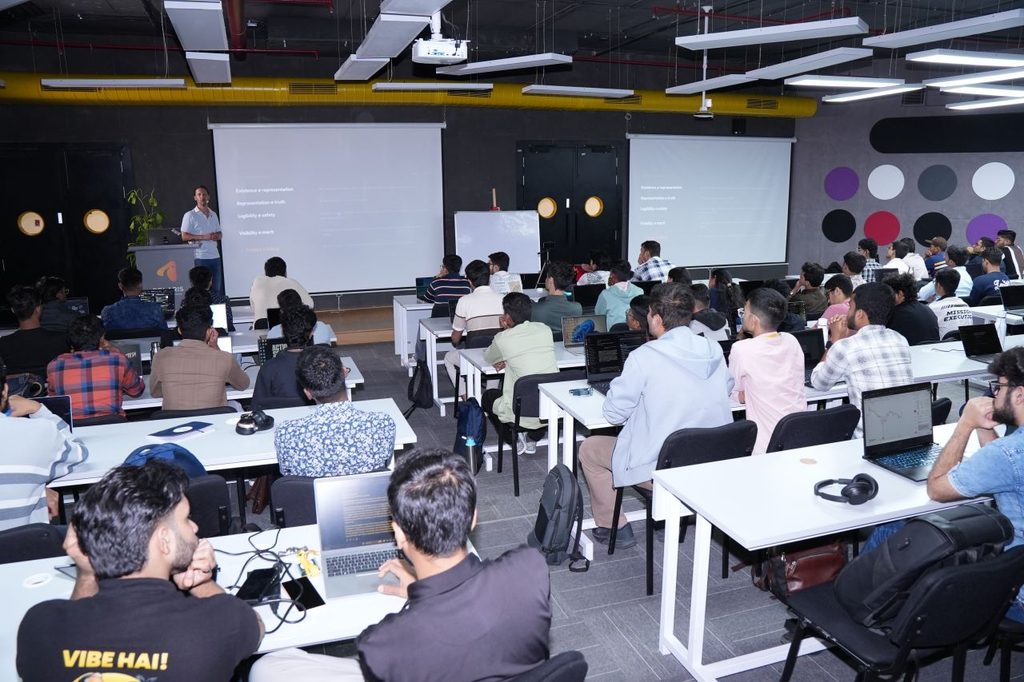
Across all three, the programme emphasises more than 5,000 hours of hands-on coding over four years. This focus on building and deploying systems distinguishes it from programmes where practical work is limited to laboratory exercises or a final-year project. The curriculum is updated annually to reflect changing technology requirements.
For students looking for a computer science in AI, the Applied AI Engineering pathway moves from core engineering concepts into machine learning, deep learning, generative AI, LLM engineering, computer vision, AI infrastructure, MLOps and AI ethics. Projects grow in complexity over four years: programming, web development, mini search engines and open-source contributions in the early years, then machine learning applications and experiment trackers, then RAG-powered chatbots, fine-tuned models and AI agents, and finally production ML systems and an industry immersion capstone. Microsoft is the industry partner, students receive Azure credits for developing and deploying projects, up to $10,000 in AI and computing credits is available, and the Microsoft Certified: Azure AI Fundamentals credential is within reach.
Product Management and Engineering is built on the idea that engineers should understand how companies are built, not just how software is written. Students study product strategy, system design, UX, experimentation, full-stack development and growth marketing, taught by tech and business faculty. The work is concrete: first-year students have built products such as Nova Accounts, a digital finance ledger with an MVP built in three weeks, Verity, an AI-powered news platform, and Nest Health, an AI health-monitoring and consultation platform. The track comes with Amazon Web Services collaboration, AWS certification and access to an exclusive startup fund of up to ₹1 crore.
Cloud and Big Data Engineering focuses on the infrastructure the world’s digital services run on: cloud architecture, big data, DevOps and distributed systems. Students build data pipelines, cloud deployments and systems designed to process and manage data reliably. The track is delivered with Google Cloud, Amazon Web Services and Microsoft, and includes Google and AWS certification, exclusive Google credits and direct access to the Google team.
| Specialisation | Core learning areas | Examples of work | Industry collaboration |
| Applied AI Engineering | Machine learning, deep learning, GenAI, computer vision, AI ethics and MLOps | RAG chatbots, fine-tuned models, AI agents and production ML systems | Microsoft curriculum partnership, Azure credits and Azure AI Fundamentals credential |
| Product Management and Engineering | Product strategy, system design, UX, experimentation, full-stack development and growth marketing | Student-built products such as finance ledgers, AI news platforms and health-tech apps | Amazon Web Services collaboration, AWS certification and startup fund of up to ₹1 crore |
| Cloud and Big Data Engineering | Cloud architecture, big data, DevOps and distributed systems | Data pipelines, cloud deployments and large-scale data systems | Google Cloud, AWS and Microsoft collaboration, Google and AWS certification and Google credits |
This structure lets them choose a direction early and progress from core computing to applied specialisation through projects. That specialisation is then tested in the workplace, which is where industry exposure comes in.
Read: Effective Job Search Strategies For Recent Nursing Graduates
3. Industry Exposure: Beyond Guest Lectures and Internships
Industry exposure is a central part of PST’s proposition. Its Bengaluru campus is located inside DivyaSree Technopark, and the programme brings students into contact with practising engineers, technology leaders, CTOs and founders. The 2026 first-year orientation featured engineering leaders from Salesforce, Atlassian, Microsoft and NVIDIA’s ecosystem at HCLTech, giving students a view of the technologies, workflows and professional expectations they will meet in the workplace.
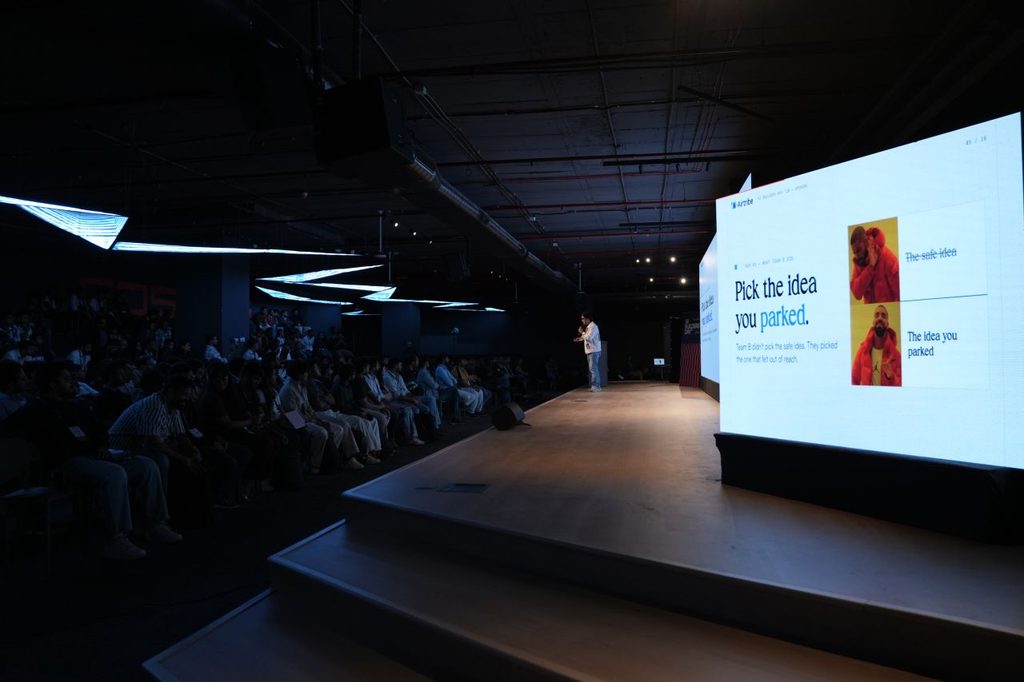
The exposure extends well beyond events. Internships begin in the second year, and projects increase in complexity as students progress through the curriculum. The final-year industry immersion capstone lets students apply their skills to a more substantial problem.
Open-source participation is another important component. Students contribute to software used by developers worldwide, publish their work on GitHub and work with maintainers and mentors, some of whom are engineers at global technology companies. These contributions build a public portfolio that shows their ability to navigate existing codebases, collaborate with others and work against real technical requirements.
Students have secured more than 36 open-source selections, including the Linux Foundation’s LFX Mentorship Program and Google Summer of Code, with contributions to projects such as MIT App Inventor, VLC, the Linux Foundation, Fossology and CC Extractor.
For students exploring the best Computer Science colleges, this kind of exposure connects technical learning with the practices of building, testing and maintaining software.
4. Career Prospects: What Do the Available Outcomes Show?
Polaris School of Technology prepares students for several technology career pathways, depending on their specialisation. Applied AI Engineering aligns with roles involving machine learning, AI application development and AI systems. Product Management and Engineering combines technical understanding with product development, while Cloud and Big Data Engineering focuses on data platforms and cloud infrastructure.
| Specialisation | Potential career pathways |
| Applied AI Engineering | AI engineer, software development engineer, applied AI researcher, ML platform engineer |
| Product Management and Engineering | Product manager, product engineer, tech lead, startup founder |
| Cloud and Big Data Engineering | Cloud architect, data engineer, platform engineer, solutions architect |
Students are already building careers while they study. They have completed international internships, contributed to projects across multiple countries and founded technology ventures. The highest reported monthly stipend is ₹2 lakh, the average stipend is ₹50,000 per month, and total student earnings exceed ₹1 crore.
For those comparing the best colleges for computer science, PST’s emphasis on projects, open source and early internships gives students several routes to build evidence of their abilities throughout the degree.
Conclusion: Is Polaris School of Technology the Right Fit?
Polaris School of Technology offers a distinct approach to engineering education, with applied AI, sustained coding, project-based learning and industry engagement built into its four-year programme. Its three specialisations lead into AI engineering, product-focused development and cloud and data infrastructure, and its open-source track and early internships give students ways to demonstrate their skills before graduation.
It is a strong choice among the best colleges for computer science for students who want a highly applied technology education and are ready to build projects, seek internships and develop a public portfolio from the start.
Frequently Asked Questions
1. Which university awards the degree at Polaris School of Technology?
The CSE degree is awarded through Medhavi Skills University, a UGC-recognised university, while Polaris School of Technology delivers the industry-skilling component of the programme.
2. How is the curriculum at Polaris School of Technology different from a traditional engineering programme?
Polaris School of Technology combines computer science fundamentals with more than 5,000 hours of hands-on coding, applied projects and specialisation-focused learning. Students progress from foundational programming to building and deploying systems relevant to their chosen field.
3. What technology projects do students build at Polaris School of Technology?
Projects vary by specialisation and academic year. They include RAG-powered chatbots, AI agents, machine learning systems, digital finance tools, AI-powered news platforms, health-tech applications, data pipelines and cloud deployments.
4. Can Polaris School of Technology’s students contribute to international open-source projects?
Yes. PST students have secured more than 36 open-source selections, including through Google Summer of Code and the Linux Foundation’s LFX Mentorship Program. They contribute to projects such as MIT App Inventor, VLC and other established software initiatives, gaining experience with collaborative development and real-world codebases.
5. What industry partnerships support learning at Polaris School of Technology?
The Computer Science at Polaris School of Technology includes collaborations with Microsoft for Applied AI Engineering, Amazon Web Services for Product Management and Engineering, and Google Cloud, AWS and Microsoft for Cloud and Big Data Engineering. These partnerships support curriculum delivery, access to cloud or AI resources, and certification opportunities.
6. Where is Polaris School of Technology located, and what is distinctive about its setting?
Polaris School of Technology is located in DivyaSree Technopark in Bengaluru. Its setting within a technology park places students in a professional technology environment, complemented by industry interactions, technical events and project-based learning.